
Manufacturing Recruitment Strategies To Attract Skilled Labor During a Shortage
Key Takeaways
1. Adapt recruitment strategies to a long-term labor shortage.
The manufacturing labor shortage is not temporary, requiring employers to shift from reactive hiring to more proactive, flexible workforce strategies.
2. Expand hiring criteria to reach more candidates.
Looking beyond direct manufacturing experience allows you to tap into adjacent industries and build a broader, more sustainable talent pipeline.
3. Invest in training to build your workforce.
Upskilling and on-the-job training help close the skills gap while improving retention and long-term workforce stability.
4. Improve speed and transparency in hiring.
Streamlined processes and clear communication around pay and expectations help secure skilled candidates before competitors do.

The manufacturing labor shortage is no longer a future risk. Today, it is actively limiting production, delaying growth and increasing labor costs. Employers are competing for a shrinking pool of skilled workers at the same time demand for manufacturing output continues to rise.
What makes this moment different is that the rules of hiring have changed. Skilled workers have more options and higher expectations, and they are evaluating employers just as closely as employers evaluate them. Manufacturers that adjust their approach are filling roles faster. Those that do not are falling behind.
The question is no longer whether you need to adapt your hiring strategy, but how quickly can you do it.
Why the Labor Shortage Is Getting Harder to Solve
Experienced workers are retiring at a steady pace, while fewer younger workers are entering the trades. At the same time, reshoring and federal investment are accelerating domestic production, increasing demand for labor in already tight markets.
Layer on a widening skills gap, especially in roles that require technical training, and it becomes clear why traditional hiring methods are struggling to keep up.
Making the situation even more challenging is that competition is no longer local. You are competing with other manufacturers, other industries and, often, employers in entirely different regions who are targeting the same candidates.
It Isn’t Just the Job, It’s the Employer
Today’s candidates are not just evaluating job openings. They are also evaluating employers. Before they apply, job seekers want to understand what it’s like to work for you.
Many manufacturers offer competitive wages, stable schedules and long-term career opportunities. But that message needs to be both visible and believable to job seekers. Otherwise, it can’t influence their decision.
Perception still lags reality in manufacturing. Some candidates assume roles are physically demanding, low-tech or limited in growth. In reality, many facilities are highly advanced and offer clear paths to higher-skilled, higher-paying positions.
What’s more, our Job Seeker Survey shows applicants are more open to manufacturing careers than many employers may assume. If your job postings and outreach don’t reflect that reality, you’re not competing effectively.
Expanding the Definition of Qualified Talent
Waiting for candidates with direct manufacturing experience to apply is one of the fastest ways to extend your time-to-fill.
Manufacturers that are hiring successfully right now are widening their lens. They are looking at candidates from logistics, construction and maintenance roles — people who already understand safety, tools and physical work environments. They are also bringing in entry-level workers with the right attitude and training them to fill skilled roles.
This approach does require more upfront investment in training. But it significantly increases the number of viable candidates and creates a more sustainable hiring model.
Rather than waiting for the “perfect” candidate, employers should instead prioritize potential and invest in development.
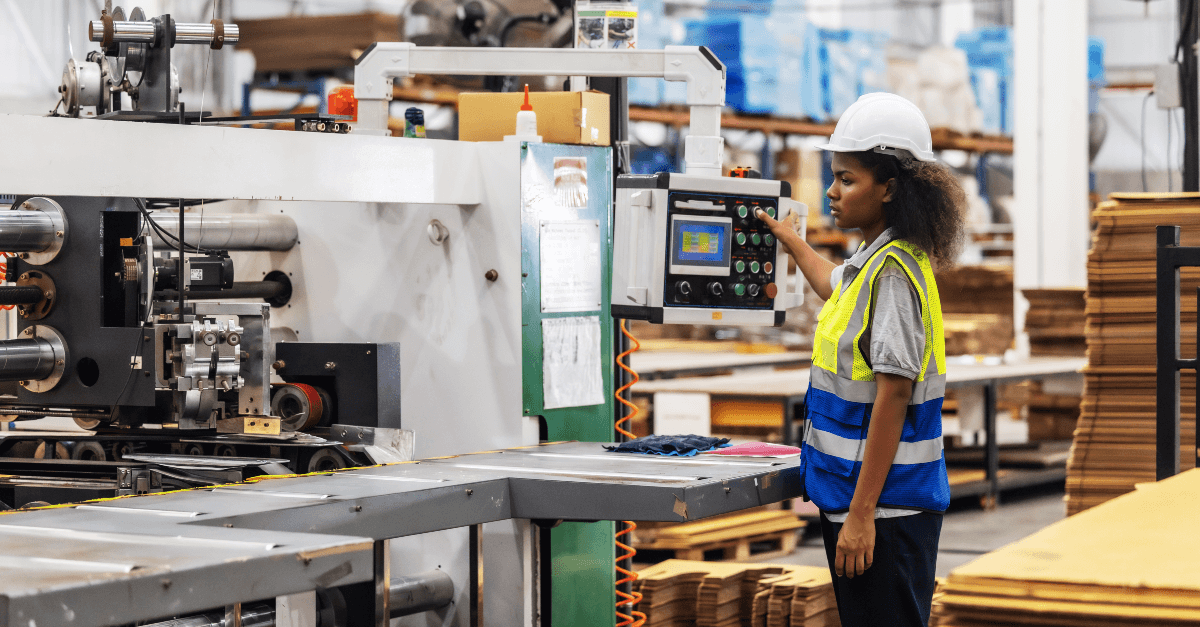
Training and Upskilling as a Competitive Advantage
There is no realistic scenario where the skills gap disappears on its own. Manufacturers that rely solely on the external labor market will continue to struggle. That’s why training has become central to modern recruitment strategies for manufacturing.
On-the-job training programs allow companies to bring in less experienced workers and quickly build capability. Cross training creates flexibility on the floor, reducing the impact of absenteeism or turnover. Partnerships with local schools or training programs can establish a steady pipeline of future talent.
Speed and Simplicity in the Hiring Process
Skilled workers often have multiple opportunities, and delays can push them toward faster-moving employers. In a competitive market, speed directly impacts hiring outcomes.
That doesn’t mean cutting corners. It means removing unnecessary friction. Manufacturers that are improving hiring outcomes are doing a few things consistently: simplifying interviews, aligning internally on requirements before posting roles and communicating quickly with candidates throughout the process.
From a candidate’s perspective, a smooth hiring process signals that your company is organized, responsive and easy to work with. That perception matters more than many employers realize.
Compensation Still Opens the Door
Compensation is still one of the biggest factors in a candidate’s decision. What’s changed is how candidates evaluate compensation as part of a broader package.
Applicants are looking for clarity early. If pay, shift details or benefits are unclear, candidates are less likely to engage. Transparency builds trust and reduces uncertainty.
Manufacturers that communicate pay ranges, shift details and incentives early in the process tend to see stronger engagement. In some cases, adjustments like shift differentials or sign-on bonuses can help close the gap with competing offers.
Compensation doesn’t operate in isolation, but it does determine whether candidates are willing to listen to your offer.
Retention is Just as Crucial as Hiring
When turnover is high, hiring becomes a constant cycle. That adds cost, strains teams and makes it harder to maintain productivity. On the other hand, when employees stay, you gain consistency and reduce pressure on recruitment.
Retention often comes down to a few key factors: clear career paths, strong supervision, safe working conditions and regular communication. Employees want to know what’s next for them and feel that their contributions are recognized.
Manufacturing companies that invest in retention reduce their overall hiring demand. That stability creates room to be more selective and strategic in recruitment.
Staffing Partners Help You Compete at Scale
For many manufacturers, internal teams are stretched thin. That’s where a staffing partner can make a meaningful difference.
A partner with manufacturing expertise can tap into broader talent networks, pre-screen candidates and deliver workers faster than most internal teams can on their own. This is particularly useful for high-volume hiring or specialized roles.
Aerotek supports manufacturers with scalable workforce solutions designed to reduce hiring timelines and improve candidate quality. In a tight labor market, that speed and access can be the difference between keeping production on track and falling behind.
Aligning Recruitment with Long-Term Growth
The most effective manufacturing recruitment strategies aren’t just about filling today’s openings. They’re about preparing for what’s coming next.
That means planning for automation, new technologies and leadership development. It also means identifying which roles are critical to your operation and building a plan to ensure you always have the talent to support them.
Companies that take a long-term approach to recruitment are better positioned to adapt, grow and stay competitive, even in an unstable labor market.
FAQ
How can manufacturers attract skilled workers?
Offer competitive pay, clear benefits and modern hiring experiences.
What drives the manufacturing labor shortage?
Retirements, reshoring and a widening skills gap.
Are transferable skills valuable in manufacturing?
Yes, they expand the available talent pool.
How important is training in manufacturing hiring?
Entry-level training, upskilling and cross training are essential for closing the skills gap.
How do staffing partners help manufacturers?
They provide faster access to qualified talent.